Trying to choose between intown Atlanta and the north metro? You are not alone. Many buyers end up weighing the same core tradeoff: do you want walkability and closer-in convenience, or more space and a more suburban housing mix? The good news is that both sides of the market offer real advantages. The key is knowing which setup fits your budget, routine, and long-term plan. Let’s dive in.
Intown vs North Metro at a Glance
If you zoom out, the broader Atlanta metro had a median list price of $404,052 and 70 days on market as of February 2026, while Atlanta city posted a median sale price of $384,000 and 86 days on market, according to Realtor.com market data.
That tells you something important right away. This is not a simple city-versus-suburb story where one side is always cheaper. In this market, the better question is what you value more day to day: proximity, mobility, and urban access in intown Atlanta, or larger homes and suburban product in north metro communities.
Intown Atlanta: What You Are Really Buying
When people say “intown Atlanta,” they often lump very different areas together. In reality, neighborhoods like Midtown, Old Fourth Ward, and Buckhead serve different budgets and lifestyles.
Midtown’s median sale price is $380,000, Old Fourth Ward sits at $456,550, and Buckhead reaches $631,250, based on Redfin neighborhood data. That is a wide spread, and it reflects very different housing options, from condos and apartments to restored historic homes and larger luxury properties.
Walkability Leads the Conversation
Intown Atlanta tends to win when your priority is access. Midtown is described as pedestrian-friendly with strong public transportation options, while Old Fourth Ward has a Walk Score of 82, Transit Score of 55, and Bike Score of 85, according to Redfin’s Atlanta neighborhood guide.
That can change the way you live. If you want easier errand runs, more restaurant access, and the ability to reduce some car trips, intown neighborhoods often make that possible in a way north metro communities usually do not.
Housing Is More Location-Driven
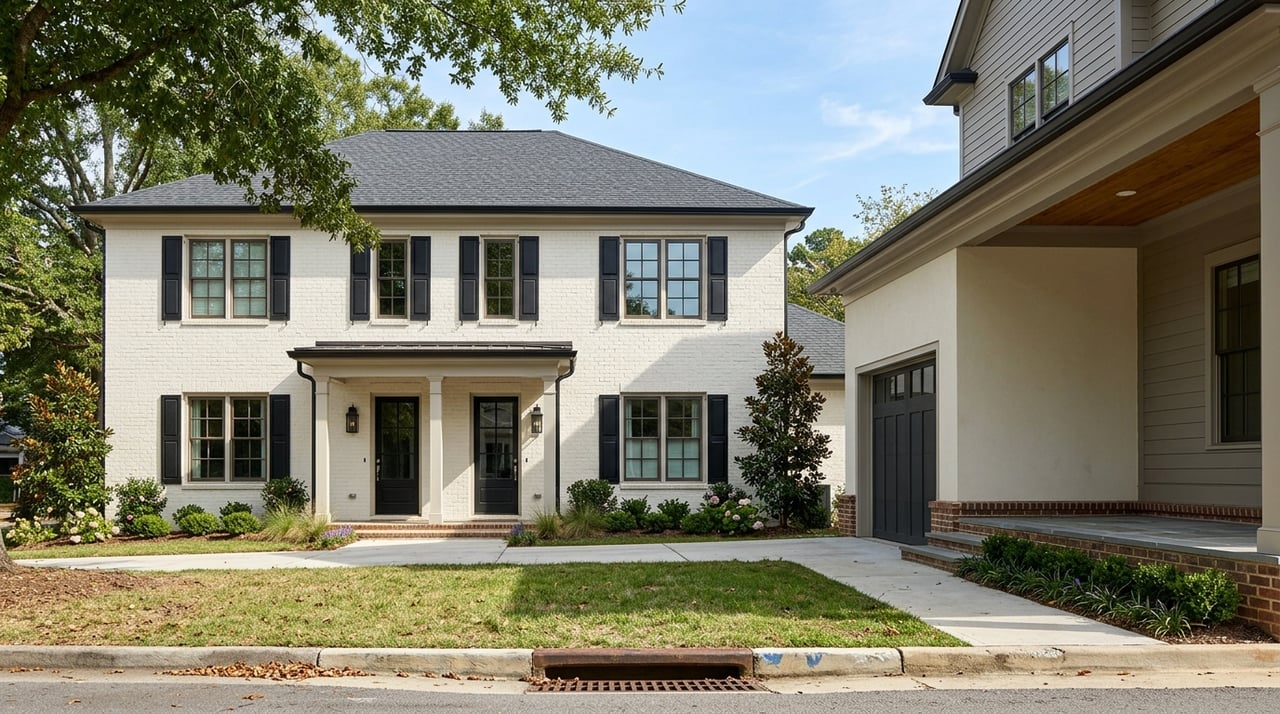
In many intown neighborhoods, you are often paying for the location first and the square footage second. Midtown includes contemporary condos and apartments alongside historic homes. Old Fourth Ward blends apartments with restored older housing. Buckhead adds a more premium layer with high-rise condos and larger homes.
That does not mean intown living always means smaller space. It does mean the product mix tends to be more compact and more tied to convenience, access, and neighborhood feel.
North Metro: What You Are Really Buying
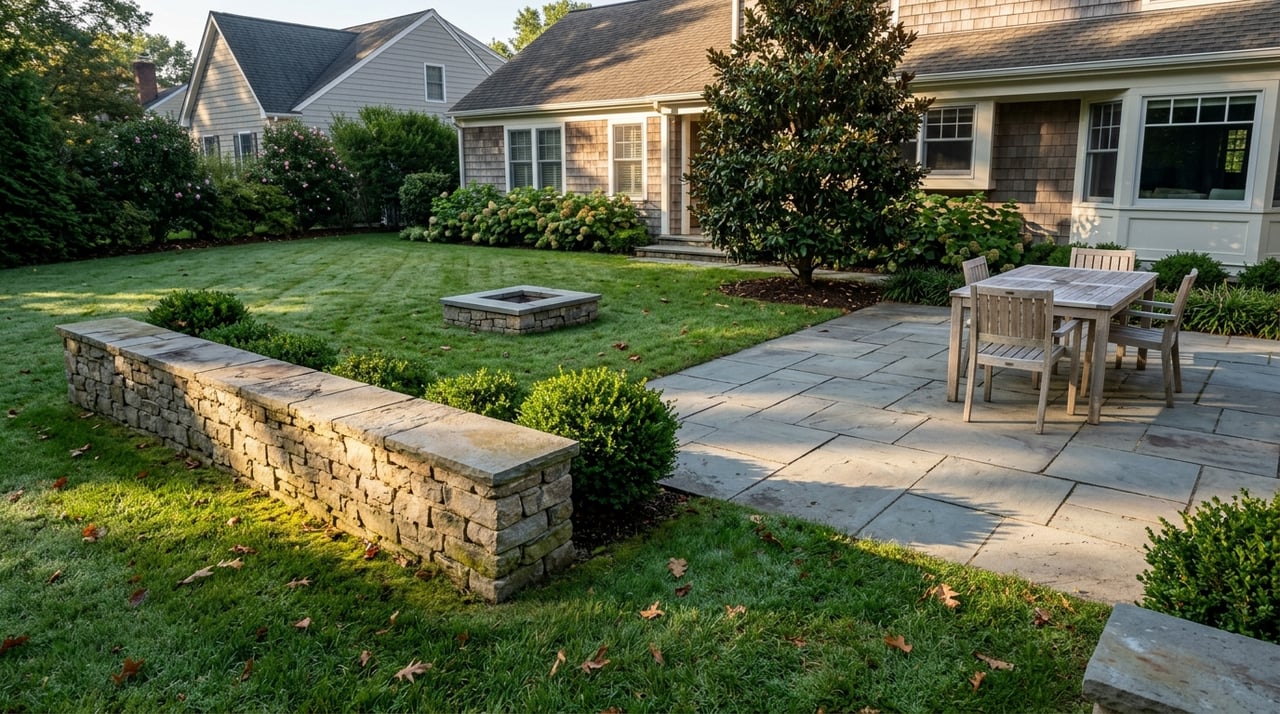
North metro Atlanta often appeals to buyers who want more room, more detached-home options, and a more suburban daily rhythm. In this comparison, Alpharetta, Suwanee, and Sugar Hill show three different versions of that value proposition.
Median sale prices currently sit around $405,000 in Sugar Hill, $536,000 in Suwanee, and $719,000 in Alpharetta, according to Redfin city-level market data. So while north metro is often associated with more house for the money, the pricing is not one-size-fits-all.
More Space, Especially in Detached Homes
If your goal is a larger single-family home, north metro usually offers more options. Redfin’s Suwanee guide includes examples of homes ranging from roughly 2,481 to 5,761 square feet, and a Sugar Hill luxury listing spans 6,822 square feet on a 0.59-acre lot, based on Redfin’s Suwanee area guide.
For many buyers, that matters more than a shorter drive to dinner. If you work from home, need more bedrooms, want a yard, or simply prefer a more suburban setup, north metro can stretch your buying power differently than intown neighborhoods.
A More Car-Oriented Lifestyle
North metro generally trades walkability and transit for space. Alpharetta’s city guide says the best way to get around is by car and gives it a Walk Score of 22 and Transit Score of 15, according to Redfin’s Alpharetta guide.
Sugar Hill is even less walkable, with a Walk Score of 8, and recent inventory there showed almost no condo supply compared with townhouses and other housing types. Suwanee is also suburban in feel, with parks and a smaller-town atmosphere, but no rail, tram, or metro stations. If your routine already centers around driving, that may feel normal. If not, it is a major quality-of-life factor to weigh carefully.
Comparing Cost and Value
The smartest way to compare these markets is not by asking which one is “better.” It is by asking what type of value you personally care about.
Here is a simplified way to think about it:
| Area | Median Sale Price | Typical Value Angle |
|---|---|---|
| Midtown | $380,000 | Walkability, transit access, condo and urban housing mix |
| Old Fourth Ward | $456,550 | High walkability, bike access, intown convenience |
| Buckhead | $631,250 | Premium intown option, mix of luxury condos and larger homes |
| Sugar Hill | $405,000 | Suburban value, more townhouse and detached-home orientation |
| Suwanee | $536,000 | Space, parks, larger homes, suburban convenience |
| Alpharetta | $719,000 | Upscale north metro benchmark, strong detached-home market |
Longer-range Census data also supports the idea that these areas occupy different value bands. The U.S. Census QuickFacts data for Atlanta shows a median owner-occupied home value of $439,600 in Atlanta, compared with $413,400 in Sugar Hill, $480,600 in Suwanee, and $649,000 in Alpharetta.
That broader snapshot is less current than recent sale-price data, but it is useful for framing long-term value patterns. In short, north metro is not automatically less expensive. Sometimes it is, sometimes it is not. The real difference is often what your dollars buy.
Commute Is Not Just About Minutes
A lot of buyers focus first on commute time, but daily mobility may matter just as much. The mean travel time to work is 26.5 minutes in Atlanta city, 26.3 minutes in Alpharetta, 30.1 minutes in Suwanee, and 33.2 minutes in Sugar Hill, based on Census commuting data.
At first glance, those numbers do not look dramatically different. But the day-to-day experience can be very different.
Intown Favors Access
Atlanta city has a Walk Score of 48 and Transit Score of 44, and neighborhoods like Midtown and Old Fourth Ward push those benefits much higher. That means intown living may reduce the number of times you need to get in the car at all.
If your work, social life, or favorite activities are concentrated near central Atlanta, that convenience can be worth paying for. You may deal with tighter parking or heavier congestion, but you gain proximity.
North Metro Favors Routine and Space
North metro communities often work well for buyers whose lives are already organized around highways, school runs, suburban office nodes, or home-centered routines. In those cases, car dependence may not feel like a downside at all.
The tradeoff is simple. You are usually giving up some transit access and walkability in exchange for more house, more land, or a different pace of daily life.
Resale and Appreciation: Avoid Easy Assumptions
One of the biggest mistakes buyers make is assuming intown always has stronger resale or that suburban homes always move faster. Current market data does not support that kind of blanket thinking.
According to Redfin’s Atlanta housing market data, Atlanta city is up 1.1% year over year and Alpharetta is up 2.7%, while Buckhead is down 18.5%, Old Fourth Ward is down 3.6%, Suwanee is down 2.5%, and Sugar Hill is down 18.2%. The takeaway is not that one market is weak and another is strong. The takeaway is that micro-market selection, product type, and price discipline matter more than broad labels.
Days on Market Vary Too
Liquidity is uneven across both intown and north metro. Suwanee is the fastest in this sample at 56 days on market, followed by Alpharetta at 81 days and Atlanta city at 86 days, while Buckhead is at 94 days, Sugar Hill at 95 days, and Old Fourth Ward at 106 days, based on Redfin market timing data.
That matters if you are thinking ahead to resale. The fastest-moving option is not always the most urban or the most expensive. Often, the strongest resale profile comes from buying a property that fits a broad future buyer pool in its price range.
Negotiation Still Matters
Sale-to-list ratios remain relatively tight across the markets in this comparison. Atlanta, Buckhead, and Old Fourth Ward are all around 96.7% to 97.0% sale-to-list, and Sugar Hill is 97.9%, according to Redfin’s Atlanta market report.
That means pricing and negotiation still matter. Whether you are buying an intown condo, a Buckhead home, or a suburban detached property in north metro, strong outcomes usually come from disciplined numbers and a clear strategy, not guesswork.
Which Market Fits You Best?
If you are deciding between intown Atlanta and north metro, this simple framework can help.
Intown May Fit Better If You Want:
- Better walkability and transit access
- Closer proximity to central Atlanta
- Condo, apartment, or urban townhome options
- More location-driven convenience
- A lifestyle where fewer car trips matter
North Metro May Fit Better If You Want:
- More square footage for the money in detached homes
- A more suburban daily routine
- More townhome and single-family inventory in many areas
- Yard space or a larger floor plan
- A purchase with space, function, and long-term flexibility in mind
In practical terms, Midtown and Old Fourth Ward are strong walkability and transit plays, Buckhead is the premium intown option, Alpharetta is the upscale north metro benchmark, and Suwanee and Sugar Hill are more space-and-value plays based on the current pricing, mobility, and housing-mix data.
Make the Decision Like an Owner and an Investor
The best move is not choosing the market with the best reputation. It is choosing the one that matches how you live now and how you may need to sell later.
That means looking at more than the list price. You should also weigh mobility, property type, buyer demand in that segment, and whether the home fits a broad resale audience. If you want a more strategic, numbers-driven way to compare intown Atlanta with north metro options, connect with Hersh Shah for a tailored plan built around your budget, lifestyle, and long-term goals.
FAQs
What is the main difference between intown Atlanta and north metro real estate?
- The main difference is usually lifestyle fit: intown Atlanta tends to offer more walkability and transit access, while north metro often offers more space and a more suburban housing mix.
Is intown Atlanta always more expensive than north metro Atlanta?
- No. Current data shows a wide range on both sides, with Midtown at $380,000, Old Fourth Ward at $456,550, Buckhead at $631,250, Sugar Hill at $405,000, Suwanee at $536,000, and Alpharetta at $719,000.
Which areas are the most walkable in this Atlanta comparison?
- Midtown and Old Fourth Ward stand out most for walkability and transit, with Old Fourth Ward posting a Walk Score of 82 and Midtown described as pedestrian-friendly with strong public transportation access.
Which north metro areas offer more space for buyers?
- Suwanee and Sugar Hill generally offer more space-oriented suburban options, especially in detached homes, while Alpharetta is the more upscale north metro benchmark.
Do north metro homes sell faster than intown Atlanta homes?
- Not always, but in this sample Suwanee had the fastest pace at 56 days on market, compared with 81 in Alpharetta, 86 in Atlanta city, 94 in Buckhead, 95 in Sugar Hill, and 106 in Old Fourth Ward.
How should you choose between intown Atlanta and north metro neighborhoods?
- Start with your daily routine, preferred housing type, budget, and long-term plans, then compare how each area supports those priorities rather than assuming one side is universally better.