If you want a home in Duluth without the full upkeep of a detached house, townhomes and condos deserve a close look. They can offer a lower entry point, a simpler maintenance routine, and a practical fit for first-time buyers, busy professionals, downsizers, and investors alike. The key is knowing how ownership, monthly fees, rental rules, and resale factors really work before you commit. Let’s dive in.
Why attached living stands out in Duluth
Duluth’s housing market is active, but it is not moving at a runaway pace. Recent market data shows a median listing home price of about $479,900, a median sale price around $482,000, and median days on market of 42, with Realtor.com describing Duluth as a balanced market in March 2026.
That matters because in a balanced market, you have more room to compare options and think strategically. If you are trying to keep your budget below the citywide median listing price, condos and townhomes may create more paths into the market than detached homes.
Current search portal data also shows a clear inventory difference. Duluth typically has far more townhomes for sale than condos, with current examples showing roughly 86 to 99 townhomes versus about 15 to 22 condos, depending on the portal.
Condo vs. townhome in Duluth
What a condo really means
A condo is not just a building style. In Georgia, condominium ownership is a legal structure, which means you generally own the space from the walls inward while sharing an ownership interest in common areas.
That is an important distinction because a condo can look like an apartment-style unit, a townhouse-style home, or another attached format. What matters most is how the ownership and maintenance responsibilities are defined in the governing documents.
What a townhome usually means
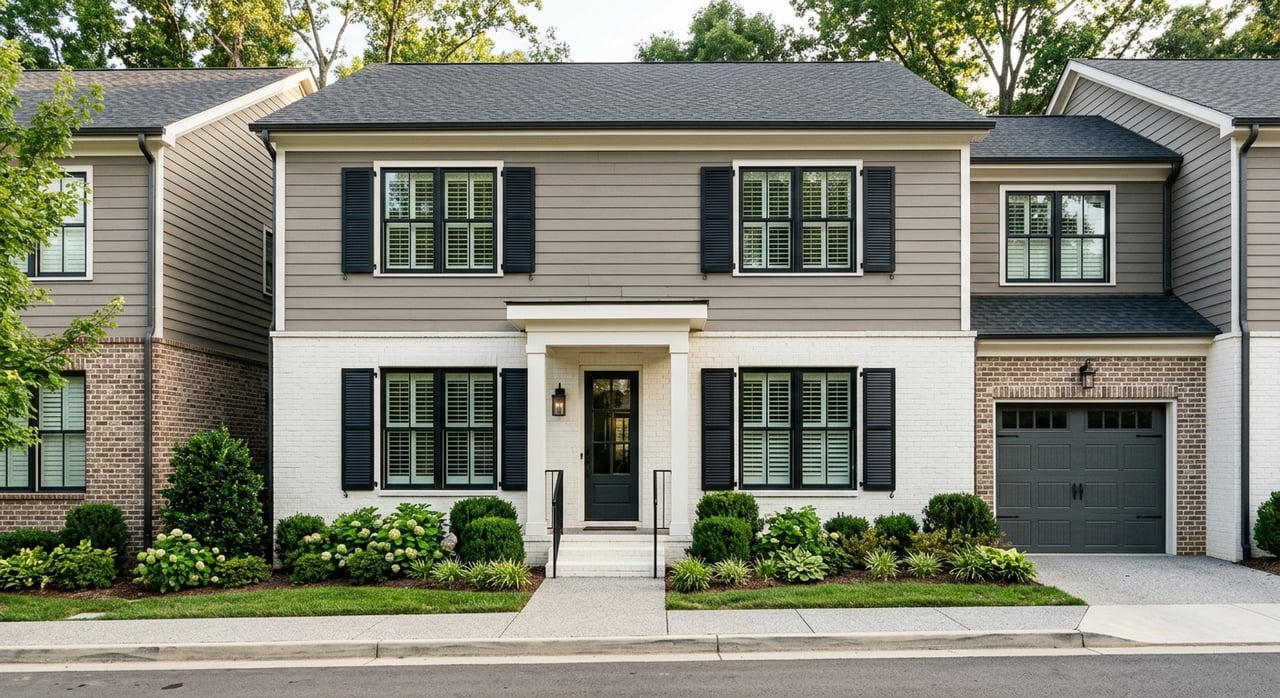
Townhomes in Duluth often give you more interior space and a more house-like layout. Current listings commonly range from 2 to 4 bedrooms, 2.5 to 4 bathrooms, and roughly 1,280 to 2,700 square feet.
Many buyers like townhomes because they often combine attached-home convenience with features like multiple stories, garage space, and more separation between living areas and bedrooms. In Duluth, current townhome inventory often clusters from the high-$200,000s to the upper-$400,000s, with newer or larger options moving above $500,000.
What pricing looks like today
Typical condo price bands
Recent Duluth condo listings show a wide price spread. Current examples include units around $215,000, $237,500, and $245,000, along with larger or upgraded options like a 3-bedroom unit at $376,000.
There are also luxury outliers far above the norm. For most buyers, though, the practical takeaway is that condos can offer one of the lower price points for ownership in Duluth.
Typical townhome price bands
Townhomes usually land higher than entry-level condos, but they often provide more square footage and more bedrooms. Current examples include listings around $267,500, $300,000, $325,000, and $330,000, with larger homes reaching $555,000 and beyond.
If you want attached living with more room to grow, the townhome segment may feel like the middle ground between a condo and a detached single-family home. It is also the segment where you are likely to find the most choices in Duluth right now.
How HOA fees affect the real cost
One of the biggest mistakes buyers make is focusing only on the monthly HOA amount. In Duluth, current townhome HOA examples range from about $132 to $250 per month, while condo HOA examples show fees around $250 to $400 per month.
The number alone does not tell you enough. What really matters is what those dues cover.
What fees may include
Based on current Duluth listings, HOA dues may cover items such as:
- Grounds maintenance
- Water
- Management fees
- Swimming or recreation access
- Insurance
- Pest control
- Security
- Termite coverage
- Trash service
A lower monthly fee is not always the better deal. If a lower-cost HOA leaves you paying separately for exterior maintenance, water, roof-related issues, or landscaping, your total ownership cost may end up higher than expected.
Why governing documents matter
Georgia housing guidance notes that condo owners share responsibility for common areas and may pay monthly dues or special assessments for larger maintenance issues. Georgia association law also gives associations assessment and lien rights for unpaid amounts.
In plain terms, you want to understand both the recurring fee and the risk of extra charges. This is where a strategy-first review can help you avoid surprises after closing.
Rental potential and investment fit
If you are buying with future rental plans in mind, Duluth can be worth a closer look. Realtor.com shows a median condo rent of $1,694, while current townhome rental listings on Zillow range from about $1,700 to $2,850 per month, with many 3-bedroom townhomes landing in the middle $2,000s.
That said, rental potential depends on more than market rent. Unit size, location, HOA policy, and city rules all affect whether a property fits your long-term plan.
Long-term rental questions to ask
Before you buy, make sure you know:
- Whether rentals are allowed in the community
- Whether there is a leasing cap
- Whether owner-occupancy ratios matter
- What the HOA charges landlords, if anything
- Whether the property still works if your exit strategy changes
Some communities allow rentals freely, while others restrict them in the governing documents. Those restrictions can directly shape your options later.
Short-term rental rules in Duluth
If you are considering short-term rental use, city rules are a major underwriting item. Duluth’s code limits short-term rentals by building type, including a cap of 1 short-term rental per 4 units in buildings with four or more units, and occupancy is limited to two persons per bedroom plus four.
That makes condos especially important to review carefully, because a building may hit the city cap before you even get to the community’s own rules. In many cases, the HOA or condominium declaration may add another layer of restrictions.
Resale and exit strategy matter more than buyers think
It is easy to focus on the monthly payment and overlook the resale picture. With attached homes, future marketability is often shaped by the monthly fee, reserve health, maintenance obligations, and whether the community’s rules support the next buyer’s goals.
Georgia housing guidance notes that condo living can be financially attractive but may not fit every buyer and can be harder to sell than a comparable single-family home with acreage. That does not mean condos are a poor choice. It simply means you should buy with a clear plan and realistic expectations.
Features that can support resale
In practice, attached homes often show better resale appeal when they offer a strong balance of value and convenience. Buyers tend to pay attention to:
- Sensible HOA fees for the level of coverage
- Functional layouts and bedroom count
- Garage or parking convenience
- Exterior maintenance support
- Rental flexibility, where allowed
- No obvious signs of deferred community upkeep
If you are thinking like both an owner and a future seller, you are already ahead of the game.
Best fit: condo or townhome?
A condo may fit you if
A condo may make sense if you want a lower purchase price, less exterior responsibility, and a more simplified ownership model. It can also be a strong option if your priority is affordability and you are comfortable reviewing HOA coverage closely.
A townhome may fit you if
A townhome may be the better fit if you want more space, more bedrooms, or a layout that feels closer to a detached home. It may also suit you if you want more inventory choices in Duluth and a better chance of finding features like a garage or multi-level living.
Smart due diligence before you buy
No matter which route you prefer, the right questions can protect both your budget and your exit strategy. Duluth listings show meaningful differences from one community to the next, so assumptions can get expensive.
Before moving forward, ask these questions:
- What does the monthly HOA fee actually cover?
- Is there a reserve study or any pending special assessment?
- Who maintains the exterior and who maintains the interior?
- Are long-term rentals allowed?
- Are short-term rentals allowed under both city rules and community rules?
- Does this property support your likely resale or rental plan?
The right attached home is not just about price. It is about how the ownership structure, fees, rules, and long-term value all work together.
If you are comparing condos and townhomes in Duluth, a data-driven review can help you narrow the field quickly and avoid buying the wrong kind of convenience. For strategic guidance on buying, selling, or investing in North Metro Atlanta, connect with Hersh Shah.
FAQs
What is the difference between a condo and a townhome in Duluth?
- In Duluth, a condo is primarily a legal ownership structure where you typically own from the walls inward and share common areas, while a townhome usually refers to an attached home style that often offers more square footage and a more house-like layout.
Are townhomes more common than condos in Duluth?
- Yes. Current search portal data shows significantly more townhomes than condos available in Duluth, so buyers usually have more townhome choices at any given time.
What do HOA fees usually cover in Duluth condos and townhomes?
- Coverage varies by community, but current Duluth listings show HOA fees may include grounds maintenance, water, insurance, pest control, termite coverage, trash, management, security, and access to amenities like swimming.
Can you rent out a condo or townhome in Duluth?
- Sometimes, but it depends on the community’s governing documents and any leasing restrictions. Long-term rental rules vary by HOA, and short-term rentals must also comply with Duluth’s city code.
Are condos cheaper than townhomes in Duluth?
- Often, yes. Current condo listings in Duluth commonly start at lower price points than townhomes, although luxury condos can exceed typical ranges.
What should you review before buying an attached home in Duluth?
- You should review the HOA fee coverage, any special assessment risk, maintenance responsibilities, rental rules, and whether the property supports your future resale or investment goals.