Is Buford, GA a good place to invest in real estate right now?
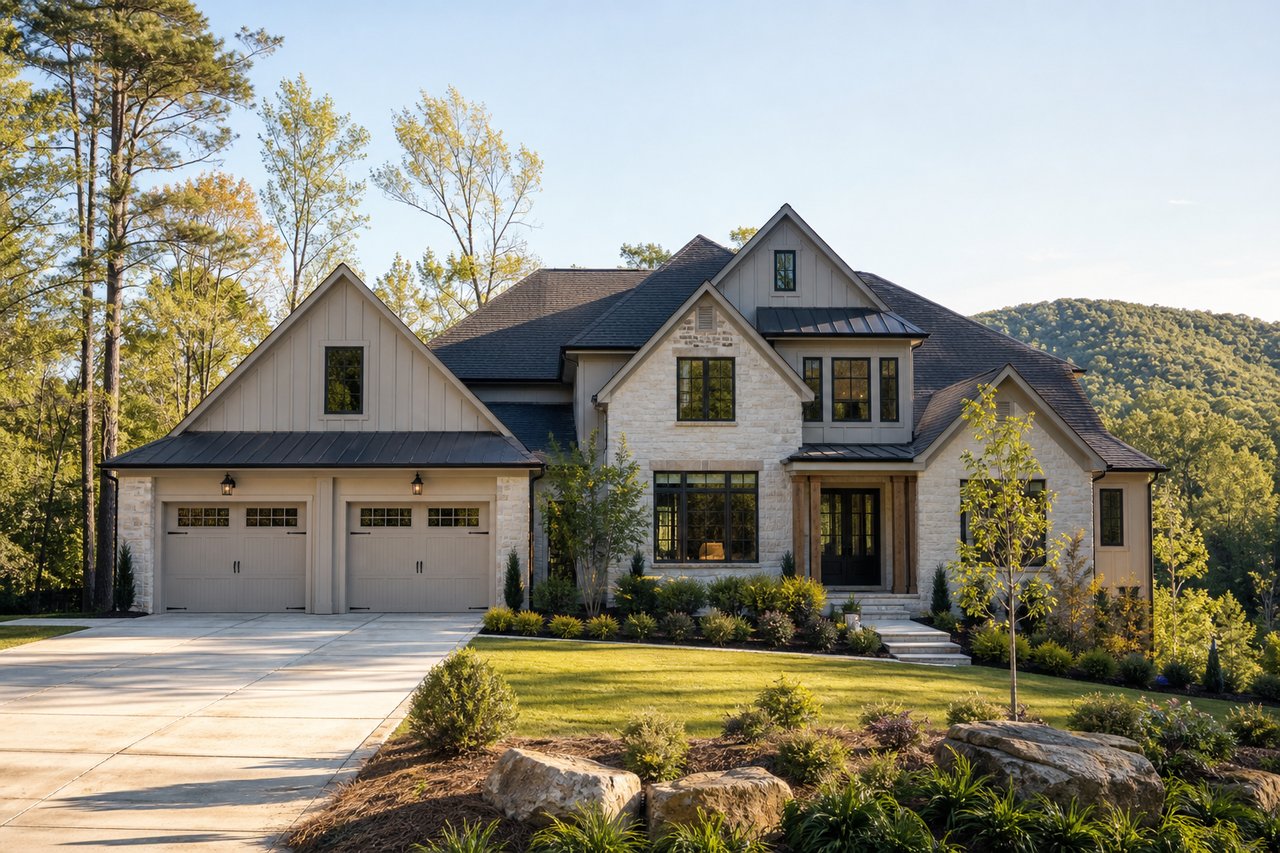
Buford, GA is one of the more compelling investment markets in North Metro Atlanta heading into late 2026. Median sale prices cluster around $490,000, transaction volume has surged compared to a year ago, and the market has cooled just enough from its 2021–2022 frenzy to give investors realistic inspection periods, financing contingencies, and negotiating room, without signaling any kind of distress. Population growth, interstate access, and proximity to Lake Lanier continue to drive demand from renters and buyers alike.
What the Numbers Actually Say About Buford's Market
I work with investors across North Metro Atlanta, and Buford consistently comes up as a market where the fundamentals make sense. Here's how the data breaks down as of mid-2026.
Recent Zillow market data puts Buford's median sale price at $490,000, with homes averaging 39 days on market and 579 active listings available. Over the past 30 days, 186 new listings came to market, and roughly 319 homes closed in the trailing 90-day window. That's a healthy volume of transaction activity.
For a slightly longer view, a July 2026 snapshot from Resideline reported 547 closed sales over the prior six months, with a median closing price of $485,500. Redfin's data for the three months ending June 2026 showed a median sale price of $560,000, down 8.6% year-over-year, but with price per square foot up 2.3% to $221, a signal that smaller, more affordable product is moving faster than the top end. Meanwhile, Zillow's home value index for early 2026 pegged the average Buford home value at $463,837, down about 2.8% over the prior 12 months.
What these numbers collectively tell me: Buford has absorbed the rate-driven correction that hit most of Metro Atlanta, prices have found a more stable floor, and volume is actually climbing. An April 2026 Gwinnett County market update cited an 87% increase in closed-sale volume year-over-year for Buford, with roughly 408 closed sales in a 90-day window. That kind of volume jump matters for investors thinking about exit liquidity.
The April 2026 Gwinnett update also characterized Buford as "one of the most active markets in the county" with inventory around 2.7 months, tighter than a classic balanced market's 5–6 months, but meaningfully looser than the 2021–2022 extreme. Sale-to-list ratios were running around 98% as of July 2025 data from Orchard, meaning modest negotiation room exists without the deep discounts that signal a distressed market.
How Buford Compares to Nearby Submarkets
Context matters when you're deciding where to deploy capital. Here's how Buford stacks up against other North Metro Atlanta markets using recent Zillow sales data (trailing ~90 days, as of August 2026). These are area-level medians, an individual home's value varies by condition, street, and build year.
Area | Median Sale Price | Median Days on Market |
|---|---|---|
Suwanee | $620,000 | 43 |
Buford | $479,000 | 34 |
Duluth | $437,000 | 55 |
Cumming | $595,000 | 20 |
Alpharetta | $750,000 | 39 |
Lawrenceville | $380,000 | 25 |
Johns Creek | $710,000 | 43 |
Buford sits in a compelling middle ground: lower entry price than Suwanee, Alpharetta, or Johns Creek, faster absorption than Duluth, and a stronger price floor than Lawrenceville. For investors targeting appreciation potential with a manageable buy-in, that positioning is hard to ignore. If you want to compare how intown Atlanta stacks up against these North Metro markets, I break that down in my post on Atlanta intown versus North Metro real estate.
Downtown Buford: A Different Micro-Market
Downtown Buford deserves its own mention because the numbers diverge sharply from citywide averages. Redfin's neighborhood data for Downtown Buford showed a median sale price of $650,000 as of December 2025, the most recent data available as of this writing, up 68.8% from the prior December, but with homes sitting an average of 103 days before closing. That combination of high prices and long timelines tells me Downtown Buford suits investors with a longer horizon and an appetite for boutique renovations or mixed-use plays, not investors who need fast turnover.
What Drives Buford's Investment Case
Population Growth and Location Fundamentals
The U.S. Census Bureau's most recent official estimate puts Buford's population at 18,642 as of July 1, 2024. Georgia Demographics projects that figure reaching 18,824 in 2026 based on a modeled 2.3% annual growth rate, consistent with roughly 11.5% growth from 2019 to 2024. These are projections, not a Census count, but the direction is consistent: Buford is growing steadily.
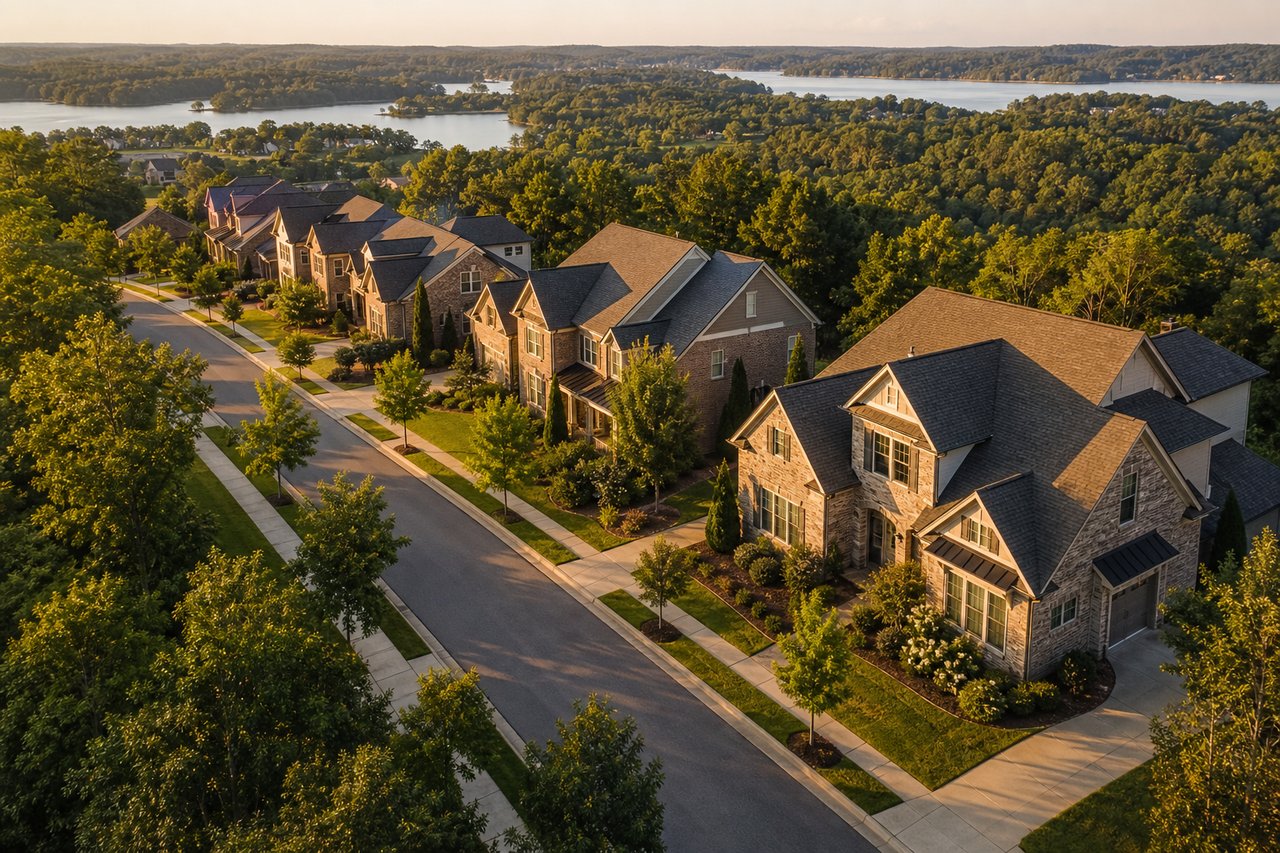
The location story reinforces the demand picture. Buford sits at the convergence of I-85 and I-985, making it accessible to employment centers across Gwinnett and Hall counties. Proximity to Lake Lanier, the Mall of Georgia, and a growing local commercial base means renters and buyers have genuine lifestyle reasons to be here beyond just commute math.
Equity Profile and Deal Opportunities
A July 2025 housing trends report from PropertyFocus, the most recent data available as of August 18, 2026, highlights something I find particularly interesting for investors: 20,523 properties in Buford carry more than 50% equity, and 9,889 of those are fully paid off. That's a large pool of long-time owners with flexibility on terms, which can open doors for creative deal structures or off-market conversations. The same report noted 35 properties in pre-foreclosure at that snapshot, a modest number that reflects a healthy market rather than a distressed one.
Property Types and Price Points Worth Targeting
Across 2025 and into mid-2026, Buford's citywide price per square foot has ranged roughly from $185 to $221, with ZIP-level data around $207 and Downtown Buford closer to $232. For renovation-focused investors, those $/sq ft benchmarks help you work backward from neighborhood price ceilings to figure out what acquisition-plus-renovation math can realistically pencil out.
A few asset types I see investors targeting most actively right now:
- Newer townhomes and small-lot detached homes for low-maintenance, long-term rentals where tenants handle minimal exterior upkeep
- Older single-family homes below the median where the $/sq ft leaves room to add value before resale or re-lease
- Lake Lanier-adjacent properties for executive or short-term rental strategies, though this requires careful verification of local zoning, HOA covenants, and any city or county short-term rental rules before you commit
One nuance worth knowing: some properties carry a Buford mailing address but sit in unincorporated Gwinnett or Hall County rather than Buford city limits. That distinction can affect school zoning, tax rates, code enforcement, and utility providers, all of which matter to your rental demand and resale story. I always walk my investor clients through this before we start making offers. If you want a deeper look at house-hacking strategies specific to Buford, I cover the mechanics in detail in Buford GA house hacking strategies for smart buyers.
What Investors Need to Know About Georgia Closings
Georgia is an attorney-closing state. In practice, that means your Buford transaction will be handled under the supervision of a Georgia-licensed real estate attorney, not a title company acting alone. Budget for attorney closing fees and associated title services as a standard line item, and treat your attorney as a resource for the process questions that come up, especially on a first deal in this market.
On the tax side, Georgia Code § 48-6-1 establishes a state real estate transfer tax on conveyances: $1.00 for the first $1,000 (or fraction) of consideration, plus $0.10 for each additional $100. The statute sets the formula but does not specify which party pays, that's negotiated in the purchase and sale agreement. Treat it as a negotiable cost and confirm the allocation in your contract, not as an assumed seller expense.
Beyond transfer tax, the cost categories investors encounter in a Buford closing include title search and title insurance, recording fees (Gwinnett or Hall County, depending on the address), lender-related fees if you're financing, inspection costs, and any HOA transfer or initiation fees if the property carries an association. For sellers, prorated property taxes through closing and any negotiated repair concessions are the typical additional items. None of these have a "standard" dollar amount I'd put on the page, your specific numbers depend on purchase price, financing structure, and what you negotiate. That's a conversation worth having with your attorney and your agent before you go under contract.
For out-of-state investors navigating this process from a distance, I cover the broader Atlanta market due-diligence framework in my guide to buying Atlanta investment property from out of state.
Frequently Asked Questions About Investing in Buford, GA
Is Buford, GA a good place to invest in rental property compared to other North Metro Atlanta suburbs?
Buford's median sale price of around $490,000 (recent Zillow data, August 2026) sits below Suwanee, Alpharetta, and Johns Creek, which lowers the entry bar for investors while still offering a market with strong absorption, homes are averaging 34–39 days on market. The April 2026 Gwinnett County update characterized Buford as "one of the most active markets in the county," with an 87% year-over-year jump in closed-sale volume. Compared to higher-priced suburbs, Buford can offer better initial yield potential, though every deal depends on the specific property and financing structure.
How fast are home prices in Buford changing, and what does that mean for appreciation?
Buford prices moderated in 2025 and into mid-2026 after the rapid gains of 2021–2022. Redfin's data for the three months ending June 2026 showed a median sale price of $560,000, down 8.6% year-over-year, while price per square foot was up 2.3%, suggesting the correction was concentrated in larger, higher-priced homes. Late-2025 data from Realtor.com for ZIP 30518 showed a 9.14% one-year price increase and a 9.87% three-year increase, indicating the longer-run trend remains positive. Investors should underwrite conservatively rather than banking on a return to 2021-style appreciation.
What types of properties are investors targeting most in Buford in 2026?
The most active investor strategies I see in Buford right now involve newer townhomes and small-lot detached homes for low-maintenance long-term rentals, older single-family homes priced below the median for value-add renovation plays, and Lake Lanier-proximate properties for executive or short-term rental use. Downtown Buford attracts investors interested in boutique renovations, though the most recent data available (December 2025 via Redfin) showed homes there averaging 103 days on market, a liquidity consideration worth factoring into your exit plan.
How competitive is the Buford housing market today, do investors still need to offer over asking?
The frenzied bidding-war environment of 2021–2022 has given way to a more negotiable market. July 2025 data from Orchard showed sale-to-list ratios around 98%, meaning buyers were typically landing within a couple of percentage points of asking price rather than offering significant premiums. Inventory has grown, up roughly 33% year-over-year as of mid-2025, and days on market have lengthened from the mid-teens to the mid-to-high thirties. Investors now have realistic room to conduct inspections, request repairs, and work through financing contingencies without losing every deal to a cash buyer.
What are the main risks of investing in Buford right now?
The key risks I walk investors through include rising inventory (more competition for tenants and buyers if you need to exit), the possibility that new construction in Gwinnett and Hall counties continues to add supply, interest rate sensitivity on leveraged acquisitions, and the city-versus-unincorporated-county distinction that affects school zoning and tax rates. Downtown Buford's 103-day average days on market as of December 2025 is a specific liquidity risk for that submarket. None of these are dealbreakers, but they all affect how you structure the acquisition and what exit timeline you plan for.
Buford's investment case in 2026 comes down to this: a market that has absorbed its post-pandemic correction, is generating strong transaction volume, and offers a lower entry price than most of its North Metro Atlanta peers. The window to buy with negotiating leverage is real, but it won't stay open indefinitely as volume climbs.
If you want a data-driven read on what a specific property or strategy could look like in Buford, reach out and let's run the numbers together. That's exactly the kind of conversation I have with investors before they commit to a market.
Equal Housing Opportunity. Each office is independently owned and operated. Hersh Shah Group is licensed with Keller Williams Intown Atlanta, regulated by the Georgia Real Estate Commission. This article is general information only and does not constitute legal, tax, or financial advice. Confirm your specific numbers, costs, and transaction details with your attorney, tax advisor, lender, or closing officer before making any investment decision.